Triton Taucher Team is your certified partner for demanding underwater work on port facilities, locks, bridges, hydroelectric power plants, drinking water tanks and industrial plants - according to DGUV regulation 40, DIN 1076, DVGW W 300 and BAW.
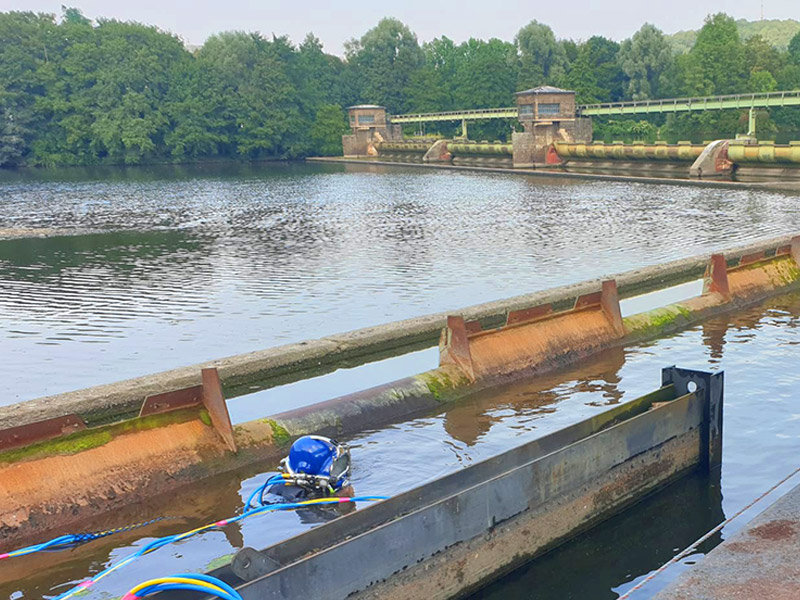
Construction diving & underwater inspection from Dortmund – in use nationwide

- Bridge pier inspection in accordance with DIN 1076
- Inverted siphon and pipeline inspection
- Residual wall thickness measurement in accordance with BAW
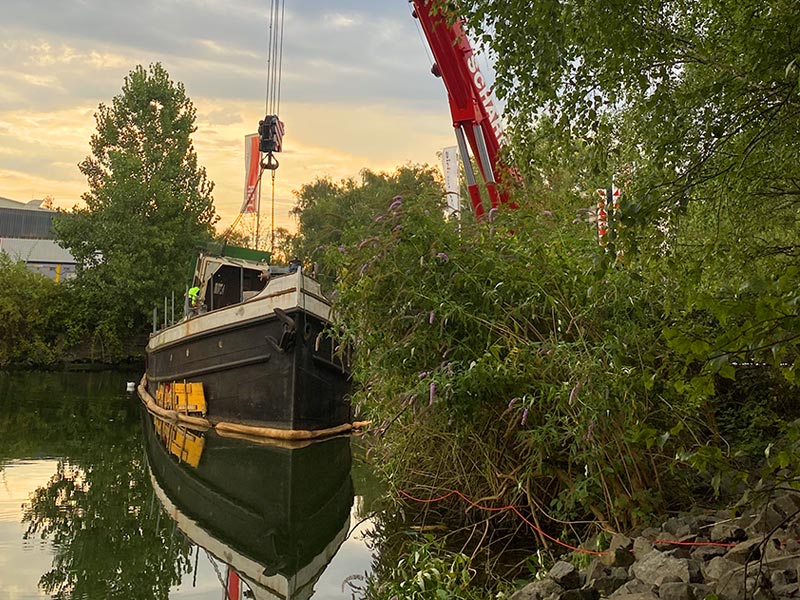
- Ship hull inspection and cleaning
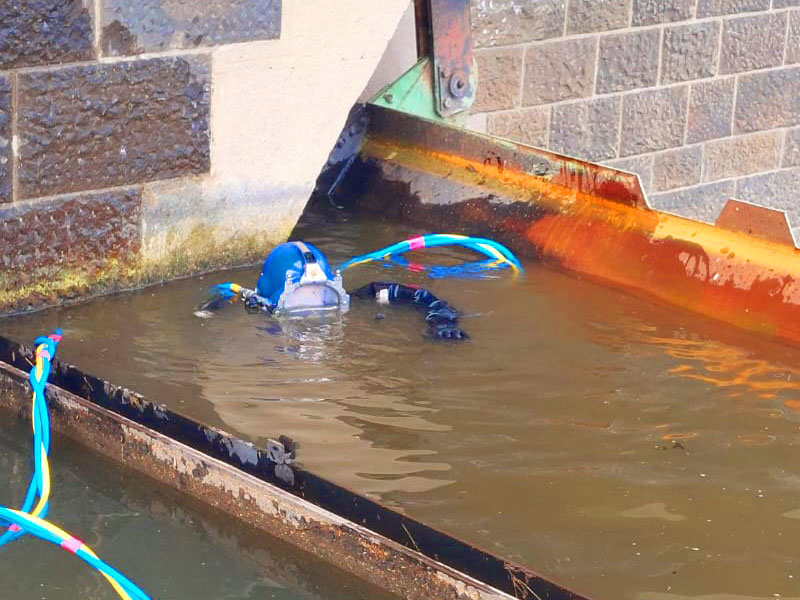
- Harbor and quay wall rehabilitation
- Lock and weir rehabilitation
- Underwater concrete works
- Underwater welding and thermal cutting
- Drinking water reservoirs (DVGW W 300)
- Hydropower plants & turbines
- Dams & reservoirs
- Underwater unexploded ordnance (UXO) clearance
24-hour emergency recovery & rapid response
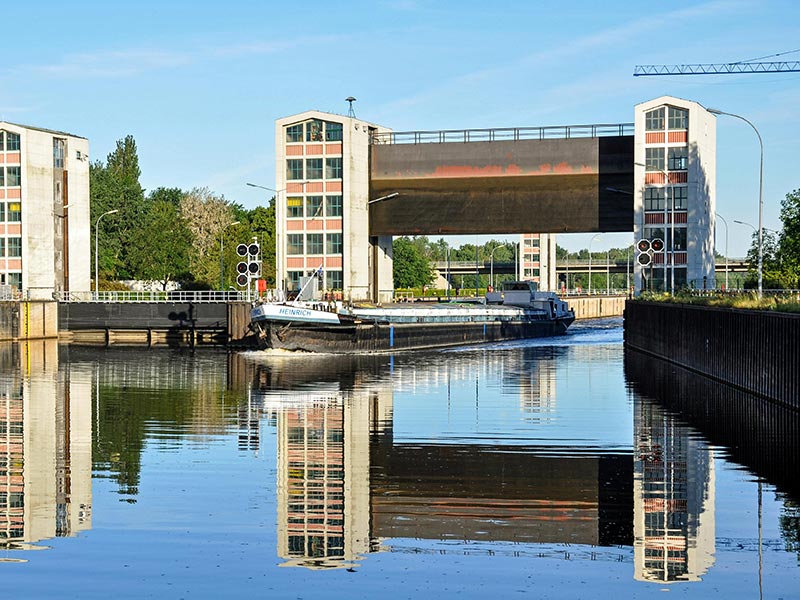
- Port & Hydraulic Engineering
- Offshore & Industry Wastewater Treatment & Tank Diving
- Geotextiles & Scour Protection
- Underwater Pipeline Construction

Certified & Safe
All operations are carried out according to DGUV regulation 40. Experienced team, complete personal equipment, documented test reports as well as photo and 3D documentation on request.
FAQ Construction Diving - Frequently Asked Diving & Underwater Inspection Questions
Are you planning diving work or have questions about construction diving? Here you will find answers to the most frequently asked questions about underwater inspection, repair and documentation.
Construction diving includes all diving work on buildings under water – from inspections to concrete work to welding and cutting work. It is carried out according to DGUV rule 101-023 and requires specially trained divers.
The most important regulations are the DGUV rule 101-023 (security), VV-WSV 2101 (federal waterways), BAW information sheets (building inspection) and ZTV-W for hydraulic engineering work. Internationally, IMCA D 014 applies.
By default, construction divers up to 50 m depth work with compressed air. Mixed gas processes or diving bells are used for greater depths. Most internal inserts range between 0-30 m.
The cost depends on the duration, depth, complexity and required equipment. We create individual offers – contact us for a free initial consultation.
When measuring the residual wall thickness, the remaining material thickness of sheet piling or steel structures is measured by ultrasound under water. In this way, corrosion damage can be quantified and residual useful lives can be calculated.
For emergencies, we offer a 24-hour operational readiness. We usually plan regular assignments within 3-5 working days. Talk to us – we will find a solution.
You will receive a complete dive report with HD video documentation, photo report, measurement logs and, if applicable, CAD drawings. All reports are standard-compliant and suitable for authorities.
Our area of application covers all of Germany and neighboring countries. The focus is on NRW, Lower Saxony and the North German coastal area.
Your question wasn't there?
Feel free to send us a message.
Write us your project request – we will get back to you at short notice
Nationwide in use – 24h readiness for emergencies.
TRITON Taucher Team GmbH
Kornharpener Str. 121, Bochum,
North Rhine-Westphalia
TRITON Taucher Team GmbH Dortmund
Nordrhein-Westfalen Bundesweit im Einsatz